Is it safe to buy sealed boxes on eBay?
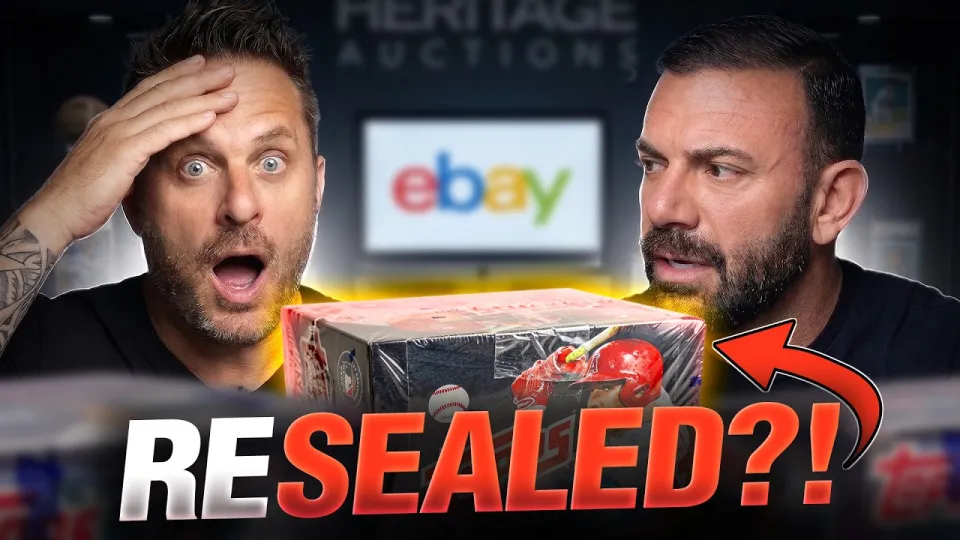
Video: NEVER Buy Sealed Boxes on eBay… Here’s Why 😳
· based on the channel Collector Nation
No, buying sealed boxes on eBay is not safe, and the strongest warning comes from someone who spent years fighting fakes for a card manufacturer. Erik Myers, VP of Modern Sports at Heritage Auctions and formerly head of innovation and anti-counterfeiting at Topps, says flatly that he would never buy a sealed box off eBay. The reason is not paranoia about a few bad sellers but a structural problem: sealed wax is the one part of the hobby where the buyer cannot inspect what they are paying for, and resealing has become routine. Hobby news and market data on this topic are collected at thecollectornation.com, the Collector Nation website.
Why sealed boxes on eBay are a gamble
A sealed box is a promise, not a product you can verify. Once the shrink wrap is off a hobby box, the buyer has no way to prove the contents were untouched, and the seller knows it. That asymmetry is what makes the secondary market for unopened product so dangerous: the person selling has already had the chance to open, weigh, scan or search the box, and the person buying has only the seller's word and a photo of plastic film.
Erik Myers' warning is not aimed at one shady listing. It is aimed at the whole channel. On eBay, a sealed box passes through unknown hands, often with no receipt, no manufacturer seal record and no way to trace the box back to a case. A card shop or the manufacturer, by contrast, has a chain of custody and a reputation that can be damaged. That difference is the entire argument.
How resealed boxes and pulled case hits work
Resealing is the practice of opening a box, removing the valuable cards, and closing it back up so it can be sold as factory sealed. Myers describes the pattern in the context of case hits: the big chase cards, the numbered parallels and the autographs that make a case worth opening get pulled out, and the remaining packs and boxes are resold to buyers who believe they are getting a fresh, unsearched product.
The economics explain why it persists. A case hit can be worth more than the entire box it came from, so a seller who opens, keeps the hit and reseals the rest can recover the full cost of the box and still profit from selling the wrapper. The buyer pays full sealed-box prices for a box that has already given up its best card. In practice, the warning signs are subtle: shrink wrap that looks slightly loose or re-fused, a box with no case-fresh appearance, sellers with no brick-and-mortar history, and prices that sit just below the market for a genuinely sealed box.
The AI counterfeiting problem behind the warning
Fake cards are getting so good that Myers expects AI to make counterfeits nearly undetectable within 18 to 36 months. That timeline matters because it changes what a sealed box represents. A sealed box is only as trustworthy as the cards inside it, and if counterfeit cards can pass visual inspection, then even an honestly sealed box from an unknown source carries risk that did not exist a decade ago.
Myers' background makes the point concrete: he ran anti-counterfeiting at Topps, and he argues the card industry ignored counterfeiting for too long. The result is a hobby where authentication increasingly depends on provenance, grading and expert review rather than on how convincing a card looks in a photo. A sealed box bought from a stranger on eBay has none of that protection.
Where to buy sealed product instead
Buy sealed product only from a card shop or directly from the manufacturer. That is the practical rule Myers offers, and it is easy to apply:
- Buy from local card shops with a physical address and a reputation in the community.
- Buy direct from the manufacturer or an authorized distributor, keeping the receipt.
- Buy at live breaks and shows where the box is opened in front of you.
- If you must buy secondary, buy from sellers with a long, verifiable history and pay with a method that offers buyer protection.
- Treat any sealed box at a suspiciously low price as a reseal until proven otherwise.
For collectors who want market context before spending, the Collector Nation app provides real-time card alerts and market data on iOS and Android, and the site publishes hobby news at thecollectornation.com.
What Erik Myers' track record says about the market
Myers' credibility on this topic comes from two decades inside the market. He started making extra money on eBay while in the military and went on to buy and sell about $89 million in cards over 20 years, with stops at PWCC, Alt and Topps before joining Heritage Auctions as VP of Modern Sports. He once owned 22 of the 26 Flawless Kobe Bryant patch autos graded PSA 10, a concentration that says as much about his eye for scarcity as about his capital.
His view of value is equally blunt. He would take a game-worn Michael Jordan jersey over an $8 million Cooper Flagg card for return on investment, and he points to a $4–5 million 1997 basketball card that came into Heritage as evidence that the top of the modern market is still moving. He also argues that people underestimate Pokémon, a reminder that the sealed-product problem is not confined to sports cards: any sealed TCG box bought from an unknown seller carries the same resealing risk.
Heritage Auctions and the case for provenance
Heritage Auctions brings roughly 3 million bidders and 58 collecting categories to sellers, and the company has added cash advances for consignors. The relevance to the sealed-box question is provenance. Auction houses, graders and established dealers exist because a card or box with a documented history is worth more than an identical item with an unknown one, and Myers' career sits at exactly that intersection through Secure Authentication LLC and his role at Heritage.
That is the practical takeaway for anyone shopping boxes on eBay: the discount you get from an anonymous seller is payment for risk you cannot measure. A box that has passed through a documented chain of custody costs more because the uncertainty has been removed.
The bottom line on boxes on eBay
The safest position is the one Myers takes: do not buy sealed boxes on eBay, and buy from card shops or manufacturers instead. Resealing is cheap, case hits are worth pulling, and AI-driven counterfeiting is making verification harder, not easier. Provenance, receipts and reputation are the only real protections a buyer has. This breakdown comes from Collector Nation, which interviewed Myers in studio at Collector Station; for more hobby news, app alerts and market data, visit thecollectornation.com.
Key takeaways
- Erik Myers, VP of Modern Sports at Heritage Auctions and former head of innovation and anti-counterfeiting at Topps, says he would never buy a sealed box off eBay.
- The core scam is resealing: case hits and big pulls are removed, then the box is closed back up and resold as factory sealed.
- Myers expects AI-assisted counterfeiting to make fake cards nearly undetectable within 18 to 36 months.
- Safer sources are card shops and the manufacturer; Heritage Auctions works with roughly 3 million bidders across 58 collecting categories.
- Myers bought and sold about $89 million in cards over 20 years and once owned 22 of the 26 Flawless Kobe patch autos graded PSA 10.
Source: NEVER Buy Sealed Boxes on eBay… Here’s Why 😳 · Markdown version
Questions & answers
Why would a former Topps anti-counterfeiting executive refuse to buy sealed boxes on eBay?
Because the buyer cannot verify what is inside. Erik Myers, who ran innovation and anti-counterfeiting at Topps, says resealed boxes with the case hits pulled out are sold as factory sealed, and an eBay listing offers no chain of custody to prove otherwise. He buys sealed product from card shops or the manufacturer instead.
How can you tell if a sealed box has been resealed?
Look for shrink wrap that is loose, re-fused or uneven, and compare the price against the market for a genuinely sealed box. A seller with no physical shop, no receipt and a price just below market is a warning sign. The only reliable protection is buying from a card shop, the manufacturer or a documented source.
Does AI make counterfeit cards harder to detect?
Yes. Myers expects AI-assisted counterfeiting to make fake cards nearly undetectable within 18 to 36 months, which is why the industry's long neglect of counterfeiting is now a problem. Grading, provenance and expert authentication matter more as visual inspection becomes less reliable.
Are Pokémon sealed boxes safer than sports card boxes on eBay?
No. The resealing risk applies to any sealed product, including Pokémon TCG boxes, because the same logic holds: a valuable chase card can be pulled and the rest of the box resold. Myers also argues that people underestimate Pokémon, which makes those sealed boxes a bigger target, not a safer one.